Styles

Home › Articles › How to Taste Beer
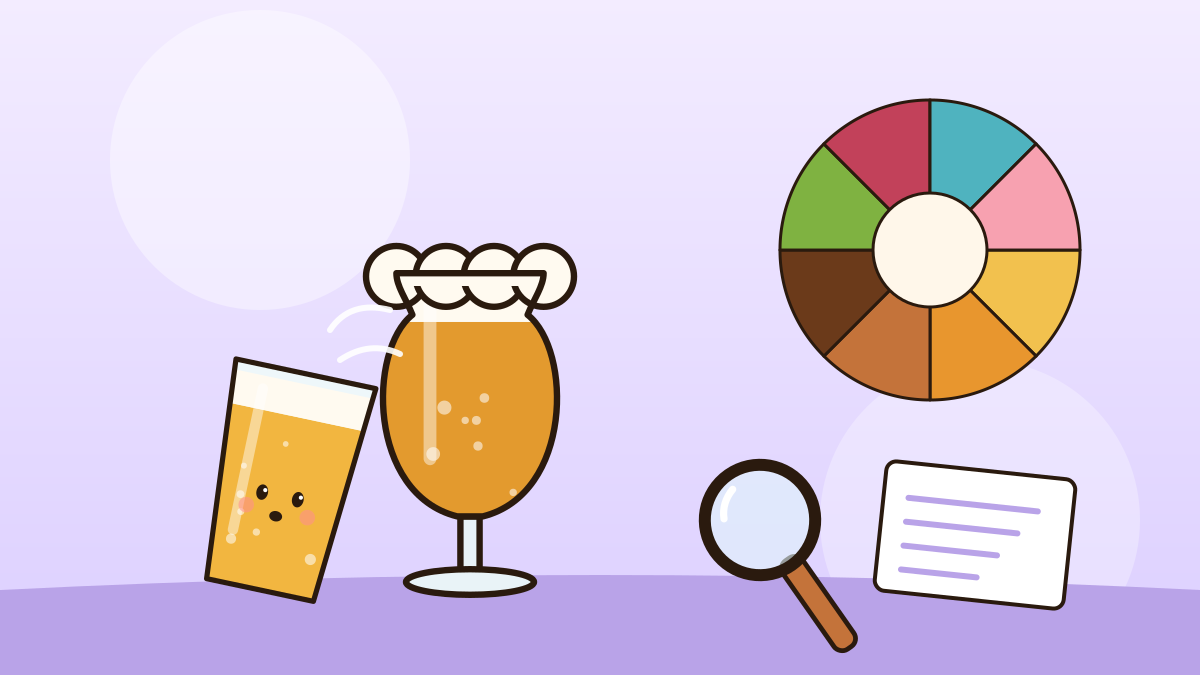
Professional beer judges are not born with magic palates. They follow a routine, pay attention and write things down. You can borrow the same routine to get far more out of every glass, whether you are at a brewery, a bottle share or on your own sofa. It takes about two minutes per beer and it makes a real difference.
A little preparation goes a long way. Use a clean glass with some curve to it, such as a tulip, teku or even a wine glass, so aromas collect. Serve the beer at a sensible temperature: crisp lagers around 38–45°F (3–7°C), most ales 45–55°F (7–13°C), and strong dark beers a touch warmer. Beer that is too cold hides its flavour.
If you are tasting several beers, pour small samples of 2–4 oz and order them from lighter to stronger, from less to more bitter, and put sour, smoked or very sweet beers near the end. Keep water and plain crackers or bread on hand to reset your palate. Avoid strong perfume, scented candles or spicy snacks while tasting; they crowd out subtle aromas. And there is no rule that says you must finish every sample. Professional judges often taste and pour away.
Hold the glass up to a light or a white background. Note the colour (straw, gold, amber, copper, brown, black) and the clarity (brilliant, hazy, cloudy). Remember that haze is expected in some styles, such as hefeweizen and hazy IPA, and a flaw in others, such as a Pilsner.
Look at the head. Is it white, off-white or tan? Tight and creamy or big and rocky? Does it last, or collapse within seconds? As you drink, watch for lacing, the rings of foam left on the glass. Good head retention usually signals a well-made beer served in a clean glass.
Smell drives most of what we experience as flavour. Start with a couple of short, gentle sniffs right after pouring, when the most volatile aromas are strongest. Then give the glass a gentle swirl to release more and sniff again. Some tasters cover the glass with a hand for a few seconds before sniffing to concentrate the aroma.
Think in categories rather than hunting for the perfect word. Malt aromas: bread, cracker, caramel, toffee, toast, chocolate, coffee. Hop aromas: citrus, pine, floral, herbal, grassy, tropical fruit, spice. Yeast aromas: banana, clove, pepper, pear, apple, bubblegum, funk. If nothing comes to mind, that is fine: “clean” is a valid note.
Take a reasonable sip and let it cover your whole mouth before swallowing. Your tongue picks up sweet, bitter, sour, salty and savoury (umami) sensations all over; the old “tongue map” that assigns each taste to one zone is a myth. Ask how sweet the beer is, how bitter, and whether those two feel balanced. Is there any acidity or saltiness?
Then think about mouthfeel, the physical sensations. Body: thin, medium or full? Carbonation: gentle, lively, prickly? Warmth: does the alcohol feel hot? Astringency: a drying, tea-like pucker, which can come from roasted grain or tannins? After you swallow, breathe out gently through your nose. This “retronasal” smell often reveals flavours you missed on the first sniff.
Notice what lingers. A West Coast IPA may finish dry and bitter; a Scotch ale may finish sweet and warming; a Pilsner should finish clean and snappy. Then step back and ask the most useful question of all: did you enjoy it, and would you order it again? A tasting note that ends with “too sweet for me, but great with dessert” is more valuable than a list of adjectives.
Most beer you buy is sound, but learning a few faults helps you understand freshness, storage and brewing. If you notice any of these in a style where they do not belong, the beer may be old, poorly stored or flawed.
Our storage guide explains how to avoid the storage-related ones at home.
No. A consistent routine and a little attention are enough. Training helps you name faults and style details, but anyone can learn to notice more.
Aromas become more volatile and noticeable as temperature rises, and carbonation softens. That is why many strong ales taste fuller after a few minutes in the glass.
Not at all. Many taprooms provide dump buckets, and pacing yourself is sensible. Staff would rather you taste thoughtfully than overdo it.