Know-how

Home › Articles › Beer Glassware Guide

Walk into a Belgian café and every beer arrives in its own branded glass. Walk into many bars elsewhere and everything comes in the same straight-sided pint. Does the shape really matter? Somewhat, yes, for reasons you can observe in your own kitchen. But you do not need a cupboard full of specialist glassware to enjoy good beer. Here is what shape does and which few glasses cover most needs.
Aroma. Much of what we call flavour is smell. A glass that narrows at the top, like a tulip or a teku, gathers aromatic compounds and funnels them toward your nose. A wide, straight glass lets them drift away.
Head. The foam on top holds aroma and affects texture. Tall, narrow glasses support a tall head; an outward-flaring lip, like on a tulip, helps a big head sit neatly. Some glasses are etched on the bottom so bubbles form at a single point, keeping a steady stream rising.
Temperature. A stem or a thick base keeps your warm hand away from the beer. That matters for delicate lagers you want cool, while cupping a snifter is a deliberate way to let a strong beer warm and open up.
Experience. Seeing the colour and clarity, holding a glass that feels right, sharing a round in matching mugs: these are real pleasures, even if they are not chemistry.
The shaker pint is the straight, slightly tapered glass common in American bars. It is sturdy and stackable (it was originally designed as half of a cocktail shaker), but it does little for aroma. The nonic pint, with its bulge near the top, is the British equivalent; the bulge improves grip, helps stacking and protects the rim from chipping. The mug or stein is thick-walled, has a handle to keep your hand off the beer, and suits easy-drinking lagers and festival fun.
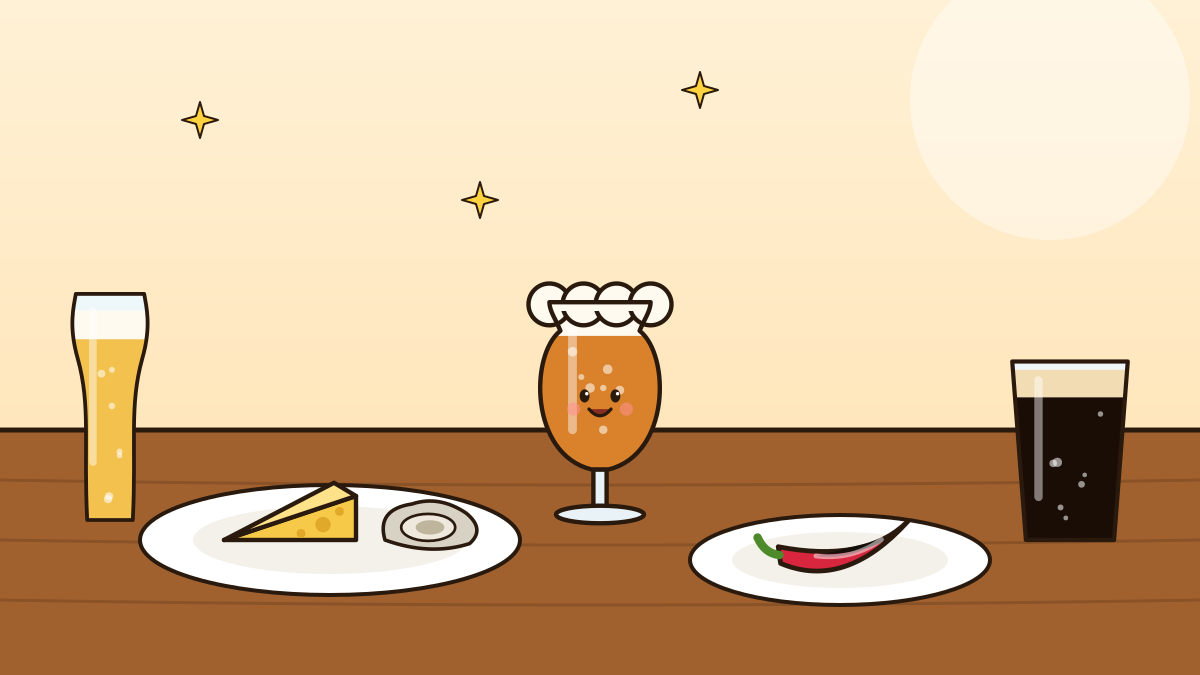
The tulip has a bulbous body and a flared lip: excellent for Belgian ales, IPAs, sours and anything aromatic. The snifter, borrowed from brandy, is wide at the base and narrow at the top, and suits strong beers you sip slowly, such as imperial stouts and barleywines. The teku, a stemmed glass with an angular bowl, was designed specifically for tasting craft beer and works well for almost anything.
| Glass | Shape | Good for |
|---|---|---|
| Nonic pint | Straight with a bulge near the rim | Bitters, pale ales, stouts, everyday beers |
| Mug / stein | Thick walls, handle | Lagers, festbier, casual rounds |
| Tulip | Round body, flared lip | Belgian ales, IPAs, sours |
| Snifter | Wide base, narrow rim | Imperial stouts, barleywines |
| Teku | Stemmed, angular bowl | Tasting almost any style |
| Pilsner | Tall, slim, tapered | Pilsners, pale lagers |
| Weizen | Tall with curved top | Hefeweizen, wheat beers |
| Stange | Narrow cylinder, small | Kölsch, delicate lagers |
The pilsner glass is tall, slim and tapered to show off pale colour and a steady stream of bubbles. The weizen glass is tall with a curvy top that leaves room for the big, fluffy head of a hefeweizen. The stange (“stick” in German) is a narrow cylinder of about 200 ml, traditional for Kölsch, where small glasses keep each pour fresh and cold. The goblet or chalice has a wide bowl on a thick stem and is associated with certain Belgian abbey and Trappist ales.
Stemmed glasses and tulips also make it easy to swirl the beer gently, releasing a little more aroma just before you sniff. That small ritual is one reason tasting-room staff often pour flights into small tulips or tekus rather than tiny straight tumblers.
The glass matters less than whether it is truly clean. Grease, lipstick, food residue and even leftover rinse aid or soap film can make a beer go flat, kill the head and leave bubbles clinging to the sides of the glass. A beer-clean glass shows a few telltale signs: the head holds together, and as you drink, foam leaves rings of lacing down the sides.
Wash glasses separately from greasy dishes using a little unscented detergent and a dedicated sponge, rinse well in hot water, and air-dry upside down on a rack rather than with a towel, which can leave lint and residue. Just before pouring, a quick rinse with cold water wets the glass so the beer pours smoothly and cools it slightly. Avoid serving from frosted, freezer-chilled glasses: they numb flavour and melting frost waters down the beer.
If you want to improve your home setup without buying a dozen shapes, three glasses cover most beers. A nonic pint for everyday lagers, pale ales and stouts. A tulip or teku for aromatic, strong or sour beers. And a tall pilsner or weizen glass for crisp lagers and wheat beers. Add a snifter later if you find yourself drinking big stouts and barleywines by the fireside. Then learn a good pour, which our pouring guide covers step by step.
Generally no. Freezing numbs aroma and flavour, and frost melts into the beer. A cold-water rinse just before pouring is better.
Usually because the glass is not fully clean. Residue gives bubbles a place to form and cling. Rewash with unscented detergent and rinse well.
No. A nonic pint, a tulip or teku, and a tall pilsner or weizen glass will handle the vast majority of beers well.