Gear

Home › Articles › How to Pour a Beer
Pouring beer seems too simple to need a guide. Yet the difference between a flat, gassy glass and a lively, aromatic one often comes down to how the beer got from the can into the glass. A good pour takes about ten seconds to learn and improves every beer you drink.
Drinking from a can or bottle is sometimes the practical choice, and that is fine. But a glass lets you see the colour, and more importantly it lets you smell the beer. A narrow opening keeps most aroma trapped inside the package, and aroma is a huge part of flavour.
Pouring also releases some carbonation into a foamy head. That head carries aroma, gives a softer texture, and means less gas ends up in your stomach. Drinking straight from the can often feels fizzier and more filling for exactly this reason.
Start with a clean glass at cool room temperature or rinsed with cold water. Then:
A common mistake is pouring gently down the side all the way to the top. That produces a glass with no head, leaving the carbonation trapped in the beer. You want some turbulence at the end.
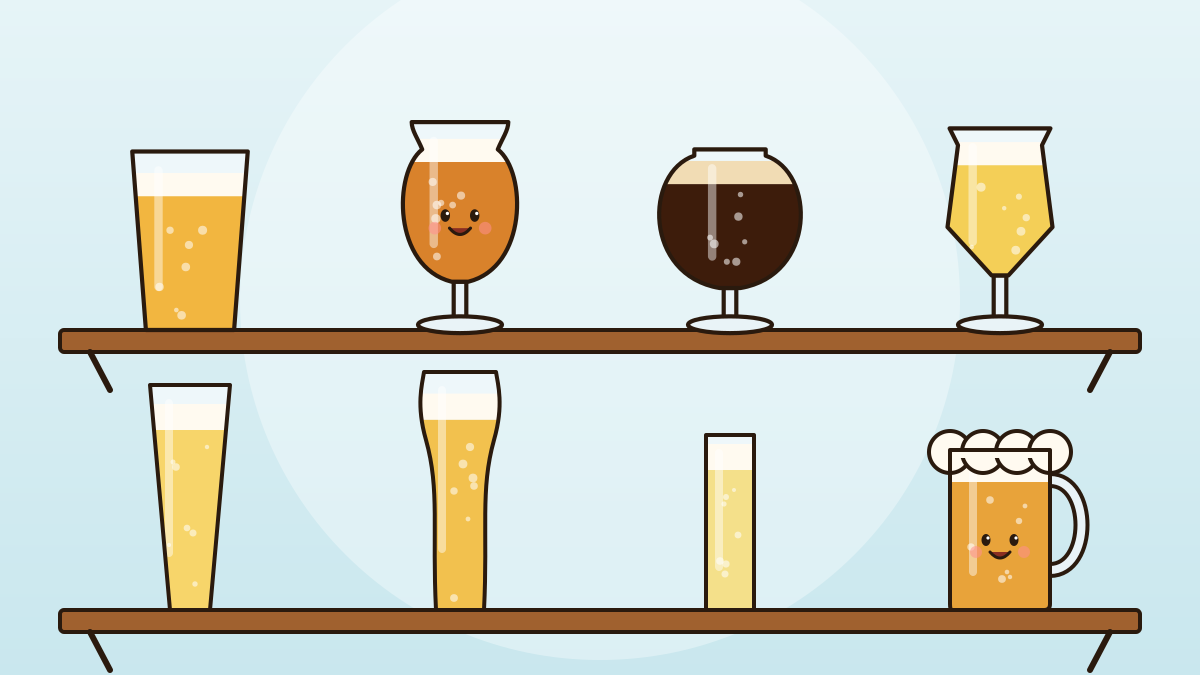
Hefeweizen and wheat beer. These are highly carbonated and meant to be served with their yeast. Rinse a tall weizen glass with cold water, pour slowly at an angle until about four-fifths of the bottle is in, then swirl the remaining beer to rouse the yeast sediment and pour it on top. Expect a big, fluffy head.
Bottle-conditioned ales. Many Belgian ales and some craft beers contain a layer of yeast at the bottom of the bottle. Stand the bottle upright for a while before opening, pour slowly and steadily in one motion, and stop when you see the cloudy yeast reach the neck, unless the style calls for it. The yeast is harmless, but it can make a beer taste muddy.
Nitro beers. Nitro cans and bottles usually instruct a “hard pour”: open, turn the can fully upside down over the glass and let it empty quickly. This releases the nitrogen and creates the cascading effect and creamy head. On draught, nitro taps use a restrictor plate to do the same job.
Czech-style lagers. In the Czech Republic, bartenders pour Pilsner in several ways, from a standard pour with a thick, wet head (hladinka), to a glass that is about half foam (šnyt), to one that is almost entirely foam (mlíko). Ordering a foamy pour there is a sign of an enthusiast, not a short measure.
Too much foam? The beer may be too warm, the glass may have been dry and warm, you may be pouring too hard or too high above the glass, or the beer may be over-carbonated. Chill the beer, rinse the glass with cold water, and start at a steeper tilt.
No foam at all? Suspect the glass first. Residue from grease, soap or rinse aid collapses foam. Rewash the glass with unscented detergent, rinse well and air-dry. If the head still disappears instantly, the beer itself may be flat or old. Our glassware guide covers “beer-clean” glass in detail.
Gushing from the can or bottle? The beer might have been shaken, stored warm or be over-carbonated. Chill it well, open it slowly over a sink, and let it settle before pouring.
Head vanishing on a dark beer? Very strong or heavily adjunct-laden stouts naturally hold less foam, as do beers with high alcohol. That is normal; a gentle swirl in a snifter can revive a thin collar of foam and a burst of aroma.
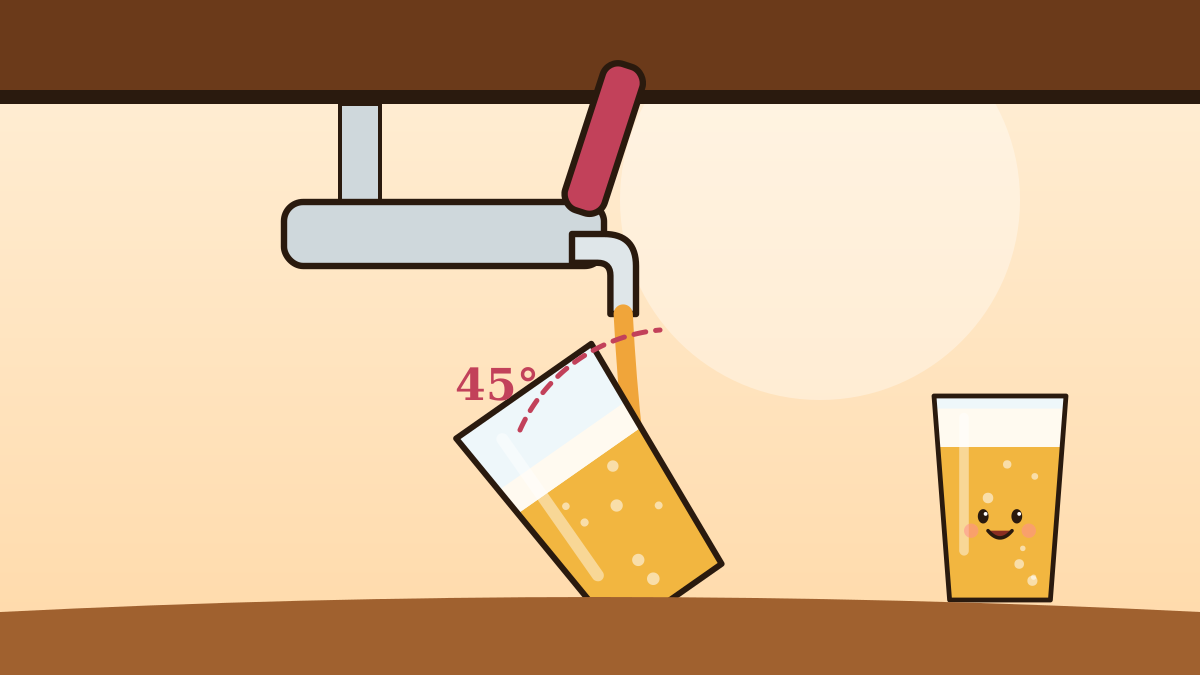
If you have a home kegerator, the same principles apply. Open the tap fully and quickly (half-open taps create foam), start at a 45-degree angle a little below the faucet without touching it, straighten as the glass fills, and close the tap fully. Constant foam problems usually point to the system rather than the pour: temperature, gas pressure or line length. Clean draught lines regularly, since dirty lines are a common source of off-flavours.
For most styles, about 1 to 1.5 inches. Wheat beers and many Belgian ales often have more; some British cask ales are served with less.
It depends on the style. Pour it into hefeweizen and some witbiers; leave it behind for most other bottle-conditioned ales unless you like the extra cloudiness.
A hard, upside-down pour releases the nitrogen and creates the creamy head and cascade that nitro beer is known for.