Homebrew

Home › Articles › Cleaning vs Sanitizing
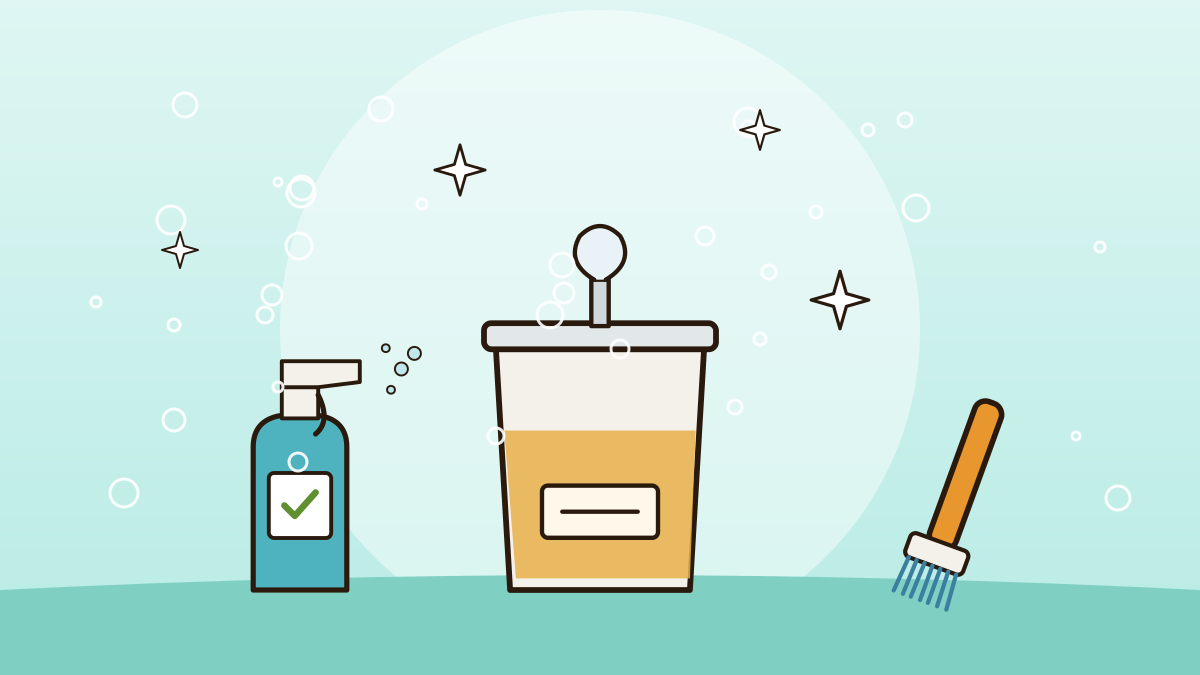
Ask experienced homebrewers for their one piece of advice and many will say the same thing: brewing is mostly cleaning. Wort, the sweet liquid that becomes beer, is a feast for microbes. Your yeast needs a head start over the wild bacteria and yeasts that live on every surface, and good cleaning and sanitising habits give it one. The two words are often used interchangeably, but they are different jobs.
Cleaning removes visible and invisible soil: dried krausen rings, hop gunk, sugar residue, dust and fingerprints. Microbes hide under that soil, so no sanitiser can do its job on a dirty surface.
Sanitising reduces the remaining microbes to a level your yeast can easily outcompete. It is not the same as sterilising, which kills everything and is not practical at home. The order always matters: clean first, then sanitise, then use.
Many homebrewers use unscented, oxygen-based cleaners made for brewing or sold as general percarbonate cleaners. They lift organic residue well when soaked in warm water and rinse away without leaving flavours. Unscented dish detergent can work in a pinch, but rinse thoroughly because residue can kill beer foam and fragrances can linger in plastic.
Be gentle with plastic fermenters, tubing and buckets. Abrasive pads and stiff brushes leave scratches where bacteria can shelter beyond the reach of sanitiser. Use a soft cloth or sponge and let soaking do the heavy work. Glass and stainless steel tolerate more scrubbing, but still avoid steel wool on stainless.
A simple habit makes cleaning much easier: rinse and soak equipment as soon as you empty it. Dried-on yeast and hop residue takes far more effort than fresh residue.
The most popular homebrew sanitisers are acid-based, no-rinse products and iodophor (an iodine-based sanitiser). Both are designed to be used at a specific dilution and contact time, and both can be left to drain without rinsing when mixed correctly. Always follow the manufacturer's label for dilution and contact time, and do not assume stronger is better. Acid-based sanitisers foam; that foam is harmless at the right dilution, so there is no need to rinse it away with tap water, which would just reintroduce microbes.
Some brewers use household chlorine bleach, but it must be thoroughly rinsed, can cause medicinal flavours if any residue remains, and can damage stainless steel with prolonged contact.
Safety: never mix bleach with acid-based sanitisers, vinegar or ammonia. The combination releases toxic gas. Wear gloves and eye protection when handling concentrated chemicals, store them away from children and pets, and ventilate your space.
Brewers talk about the “hot side” and the “cold side.” Everything before and during the boil is the hot side: the boil sterilises the wort, so the kettle, grain bag and spoon used in the boil need to be clean but not sanitised. Everything that touches wort after it cools below boiling is the cold side, and that all needs sanitising.
| Hot side: clean only | Cold side: clean, then sanitise |
|---|---|
| Brew kettle and lid | Chiller (if not placed in the boil for the last minutes) |
| Grain bag and steeping gear | Fermenter, lid, grommet and airlock |
| Spoon used during the boil | Thermometer, hydrometer and test jar |
| Hop bags used in the boil | Siphon, tubing, bottling bucket and spigot |
| Measuring cups for extract | Bottles, caps, bottle filler, scissors for yeast packs |
New brewers often panic at the sight of a busy fermenter. Most of what you see is normal. A thick, rocky, tan or off-white foam (krausen) with brown flecks of hop and protein is healthy fermentation, and it leaves a dirty-looking ring on the walls when it falls. Sediment at the bottom is spent yeast. A sulphurous or eggy smell during active fermentation is common with some yeast strains and usually fades.
Possible signs of infection include a thin white or grey film on the surface that looks wrinkled, stringy or bubbly (a pellicle), fuzzy mould spots, strong vinegar or nail-polish smells in a beer that should not have them, or bottles that gush and keep getting more carbonated over time. If you see fuzzy mould, discard the batch. For other symptoms, taste a small sample; if it is unpleasant, cut your losses, deep-clean everything, and consider replacing scratched plastic parts and tubing.
The best sanitation plan is one you follow every single time. Keep a spray bottle of mixed sanitiser within reach on brew day and bottling day for quick spritzes on scissors, yeast packets and hands. Lay out the equipment you will need in the order you will use it. After each session, clean and dry everything before storing it, and label the date on mixed sanitiser so you know when to replace it. These small habits cost a few minutes and protect hours of work.
Hot tap water is not hot enough to sanitise reliably. Use a proper brewing sanitiser at the labelled dilution, or boiling for items that tolerate it.
No, when mixed at the correct dilution. Rinsing with tap water can reintroduce microbes. Just let the equipment drain.
It depends on the product and your water. Follow the label; many brewers mix fresh for each session to be safe.